
This post has been a work in progress for several weeks – so settle in and lets have a chat!
First things first, what is a TCS food?
TCS stands for “Time/Temperature Controlled for Safety”. TCS foods are susceptible to rapid growth of pathogenic bacteria if not handled properly. These foods include meat, poultry, fish, eggs, dairy products, cooked vegetables, cooked rice, and raw & cut fruits, vegetables and leafy greens. TCS foods must be kept at specific temperatures to prevent the growth of bacteria. If these foods are not kept at the correct temperature, they can support the growth of pathogenic bacteria and make people sick.
But wait, there’s cream cheese (dairy) in cream cheese frosting. Are home bakers allowed to sell TCS foods? Doesn’t dairy need refrigeration?
Glad you asked! Here’s an important data point or two:
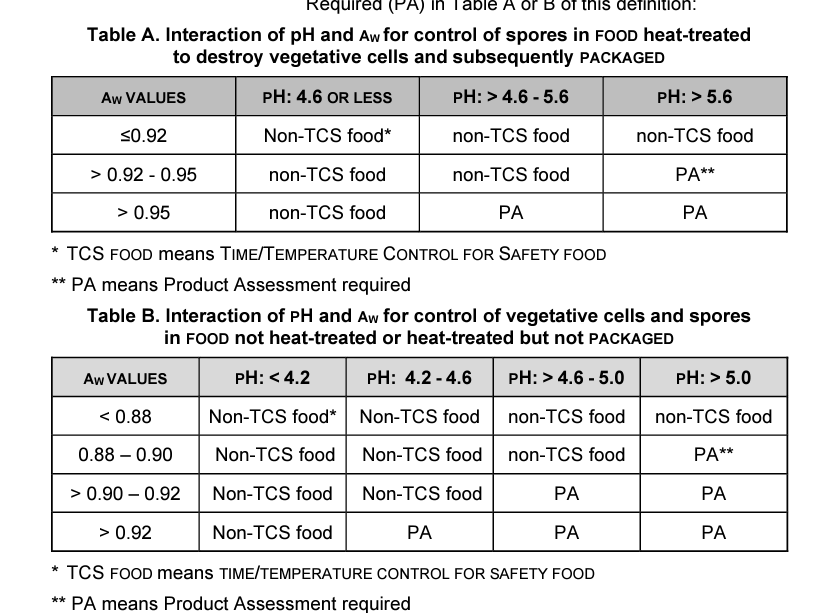
The pH of TCS foods is a measure of its acidity or alkalinity. Low acid foods (generally > 4.6 pH) are more susceptible to bacteria growth. More acidic foods (generally <4.6 pH) are less susceptible. Science!
The water activity (aw) of TCS foods is a measure of how much water is available in the food. Just like pH, the higher the water activity (generally > .88), the more susceptible to bacteria growth. More science! (Shout out to the science teacher in the family 😊 )
Additionally, we need to take into consideration pH and aw interaction, heat treatment, and packaging.
OK, so let’s get back to the cream cheese frosting. It tastes really good, but how do you know your frosting is safe?
EVEN MORE SCIENCE! I have had all products which could be considered potential “TCS foods” tested at a lab to ensure they are within the safe and acceptable parameters for pH and water activity. It is not cheap, nor is it easy, but it is IMPORTANT! If the testing isn’t done, the home baker (or inspector) doesn’t know where the food stands on the scale of SAFE > DANGER scale.
I follow my tested and approved recipes for the foods that could be considered “TCS” every time I make them.
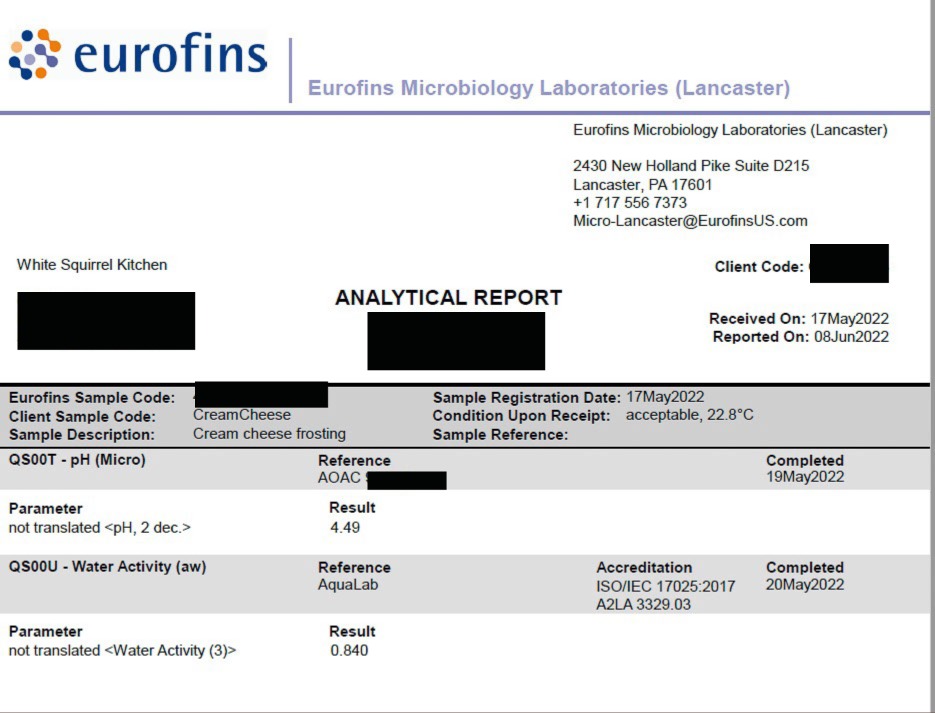
Link to 2022 FDA Food Code for my fellow geeks.
Below is a table with the important numbers from the FDA Food code:
Are all licensed home bakers required to have their products tested?
In order to legally (I cannot emphasize the word LEGALLY enough) sell homemade baked goods, the Pennsylvania Department of Agriculture requires home based businesses to be inspected. We are then (hopefully!) approved as a “Limited Food Establishment”.
Home based bakers are expected to comply with the PA Department of Agriculture requirements which includes knowing which products we are allowed to sell, and which products are TCS (or could potentially be considered TCS, like cream cheese frostings or buttercream frostings) and have them tested prior to taking them to market if we choose to use them. One rule of thumb is – if a food requires refrigeration, it is not allowed under the “Limited Food Establishment” rules. If the baker is unsure, the PA Department of Agriculture has local inspectors available to answer these questions.
Does every licensed home baker do this? And how can I tell if they do?
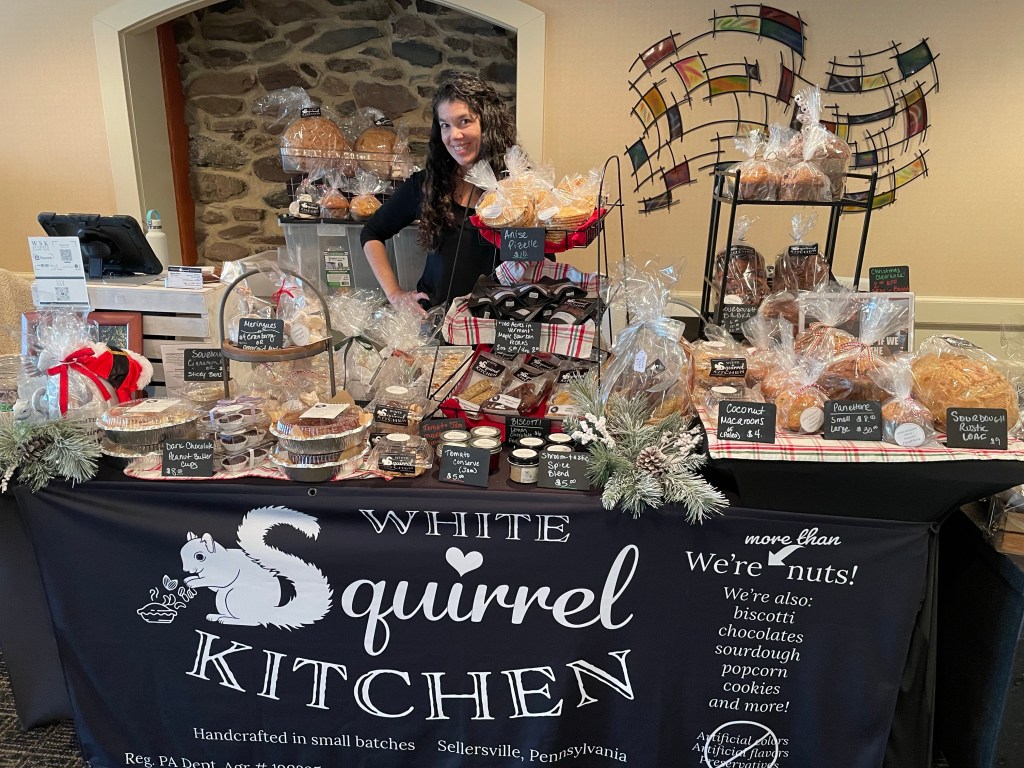
First step is to ask if they are registered with the PA Department of Agriculture. If they are registered, they have been through an inspection process. This means an inspector has been to their house, inspected the kitchen and labeling, and have approved the products intended for sale*. Our registration number is on our banner!
(*Note: This does not mean the lab testing has been done, or that the inspector knows everything they make.)
While I won’t assume one way or another what anyone else does, I can tell you it’s OK to ask. If you feel uncomfortable with FOOD you plan to EAT at all, you have every right to be informed. It might be uncomfortable to ask, but here at White Squirrel Kitchen, we are never too busy to answer with a simple “yes – I have had this tested and it is safe and approved by the PA Department of Agriculture” or “No, it doesn’t apply to this item because x, y, z”.
Please don’t automatically think the baker is too busy to answer questions about the quality and safety of your food. Food safety is our top priority and we’re happy to tell you about food sourcing and preparation so you have full confidence.
Another alternative would be to file a complaint with the Department of Agriculture. The PA Department of Agriculture should maintain a list of what foods a vendor has tested and approved to offer at markets. A vendor should absolutely know what they have been approved to sell to the public.
There seems more to being a vendor, has this happened to you?
Let me share a recent example of how the PA Department of Agriculture inspectors interact with the home bakers “behind the scenes”
I received an email from my inspector at the PA Department of Agriculture saying they received a complaint about my use of cream cheese frosting. At first, my mind went down a stressful thought process of “Who reported me? What did I do? Why would someone report me? Why didn’t they just ASK ME?”
As it turns out, there was a transition between my former (retired) inspector and my new inspector, and the frosting test results were not found in my file. (Had the results been recorded in my file during the transition, I don’t think there would have been an email sent to me about the complaint!!) . Everything was quickly resolved with one email back to the inspector with all my previously approved lab results.
So just be aware, you have the right to file complaints, you absolutely do – and if you see something unsafe or unsanitary occurring in the wild (this goes for restaurants and any food service establishment) you SHOULD file a complaint.** However, we humbly suggest you ask first, then use your judgment from there. You might be surprised what you can find out from a good conversation.
**Note: Please make sure you are reporting to the correct jurisdiction, local County Health Departments may cover certain areas as well.
We look forward to seeing you at the next market!!
One quick note: if you’re a vendor/home baker and reporting your competition because YOU were caught not following the rules – shame on you 😊 BUT – if you are a home baker and would like some guidance on getting through the process – I’m happy to answer any questions. Send an email to gina@whitesquirrel.kitchen
Please note: the information above does not cover every possible scenario, this can be a very nuanced situation and this post refers to one specific scenario (mine).
If you’ve made it this far – thank you! You shall be rewarded with 15% off your next Cinnamon Roll 5 pack order – use code “CinRoll15”
 White Squirrel Kitchen